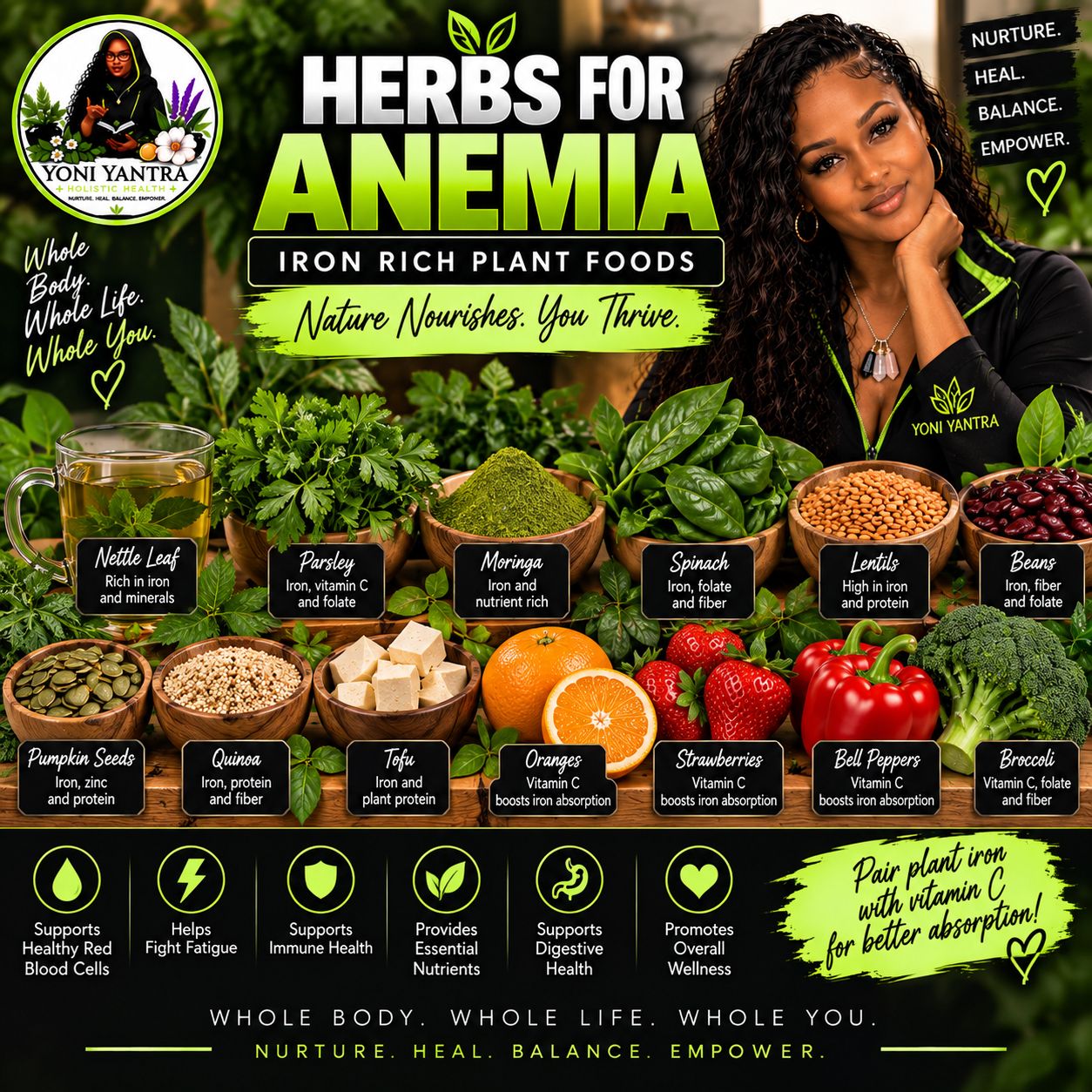
Herbs & Anemia: Can Plants Help Support Your Iron?
Herbs & Anemia: Can Plants Help Support Your Iron?
Feeling tired doesn’t automatically mean you have anemia. Anemia has several possible causes, including iron deficiency, vitamin B12 or folate deficiency, blood loss, chronic illness, and other medical conditions. That’s why testing matters before trying to correct it on your own.
When iron deficiency is the cause, food should be part of the conversation and some herbs and plant foods can contribute nutrients that support healthy red blood cell production.
🌱 Herbs & Plant Foods to Know
Nettle leaf contains some iron and other minerals and can be enjoyed as an herbal tea or food. However, a cup of nettle tea should not be considered a replacement for prescribed iron treatment when someone is iron deficient.
Parsley provides vitamin C, folate and a small amount of iron. It works well as an addition to salads, soups, vegetables and other meals rather than as an anemia treatment by itself.
Moringa leaves contain iron and other nutrients, although the amount varies considerably depending on whether they’re fresh, dried or powdered. Moringa can add nutrition to the diet, but evidence isn’t strong enough to rely on it to correct anemia.
Beyond herbs, plant sources of iron include lentils, beans, tofu, fortified cereals, pumpkin seeds and leafy greens.
🍊 Pair Plant Iron With Vitamin C
Here’s an important nutrition tip: the iron found in plants is non-heme iron, which isn’t absorbed as efficiently as the iron in animal foods.
Pairing iron-rich plant foods with vitamin-C-rich foods such as oranges, strawberries, kiwi, bell peppers, tomatoes or broccoli can improve absorption.
For example: lentils + bell peppers, spinach + strawberries, or beans + tomatoes.
☕ Watch the Timing of Tea
Not every herbal tea belongs with your iron-rich meal. Tea and coffee can reduce non-heme iron absorption because of their polyphenol content. If you’re trying to improve iron intake, consider having them separately from your iron-rich meals rather than washing the meal down with tea.
🩸 Know Your Numbers
If you suspect anemia, ask your healthcare professional whether you need testing such as a CBC and iron studies, including ferritin. Severe or persistent iron deficiency may require iron supplementation and investigation of the underlying cause food and herbs alone may not be enough.
And don’t start high-dose iron simply because you’re tired. Too much iron can also be harmful.
Yoni Yantra Nutrition Reminder:
Use herbs to complement good nutrition not to replace diagnosis or necessary treatment.
Whole Body. Whole Life. Whole You.
Nurture. Heal. Balance. Empower.
Comments