Mineral Deficiencies: Is Your Body Missing Something?
You can eat every day and still fall short on certain nutrients. Minerals are needed in relatively small amounts, but they play important roles throughout the body—from muscles and nerves to bones, blood cells, fluid balance, and normal energy metabolism.
The tricky part? A mineral deficiency doesn’t always announce itself clearly. Fatigue, weakness, muscle cramps, changes in appetite, brittle nails, or difficulty concentrating can have many causes, so symptoms alone can’t tell you which mineral you need.
💚 Minerals Worth Knowing
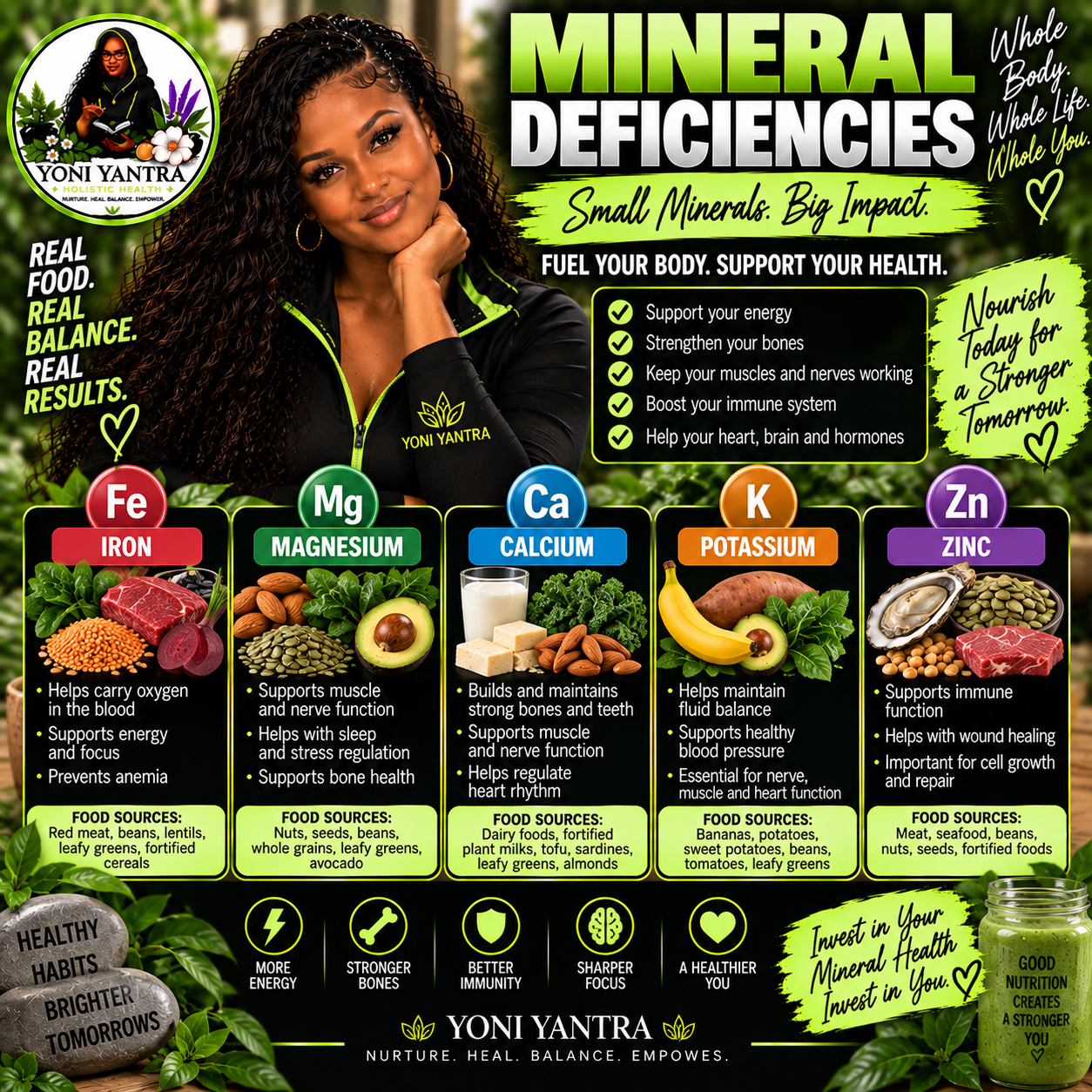
Iron 🩸 helps your body make hemoglobin, which carries oxygen in the blood. Low iron can contribute to iron-deficiency anemia. Food sources include beans, lentils, fortified cereals, leafy greens, meat, and seafood.
Magnesium 🌱 supports normal muscle and nerve function, blood-sugar regulation, and bone health. Find it in pumpkin seeds, nuts, beans, whole grains, and leafy greens.
Calcium 🦴 is essential for bones and teeth and also helps muscles, nerves, and blood vessels function normally. Dairy foods, fortified plant milks, tofu, sardines, and certain leafy greens can contribute calcium.
Potassium 🍌 helps regulate fluid balance and supports normal nerve, muscle, and heart function. Potatoes, beans, bananas, avocado, tomatoes, and many fruits and vegetables contain potassium.
Zinc 🛡️ is involved in immune function, wound healing, and normal cell processes. Sources include meat, seafood, beans, nuts, seeds, and fortified foods.
🥗 Food First—But Know When to Test
More isn’t always better. Taking mineral supplements without knowing what you need can sometimes cause problems. Iron, potassium, zinc, and other supplements can be harmful in excessive amounts or interact with medications.
If you have persistent symptoms or believe you may be deficient, talk with a healthcare professional about whether dietary assessment or appropriate testing makes sense.
And remember: sometimes the issue isn’t simply what you’re eating. Certain medications, digestive conditions, heavy menstrual bleeding, pregnancy, restrictive diets, and other health factors can affect nutrient needs or absorption.
Yoni Yantra Nutrition Reminder
Don’t just ask, “What supplement should I take?” Ask, “What does my body actually need?”
Learn your numbers when appropriate. Build a nutrient-rich plate. Supplement with purpose not guesswork.
Whole Body. Whole Life. Whole You.
Nurture. Heal. Balance. Empower.
Comments